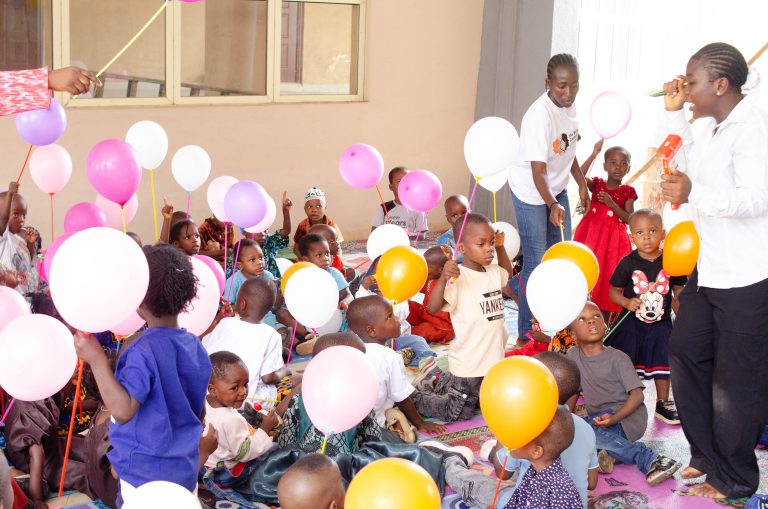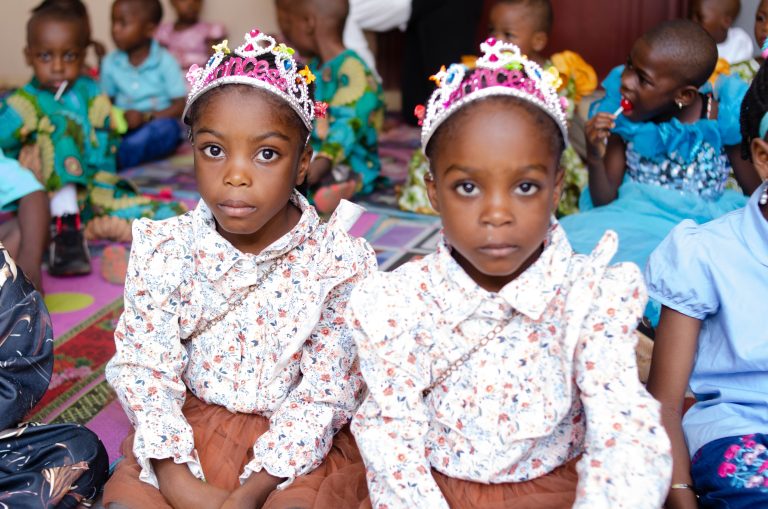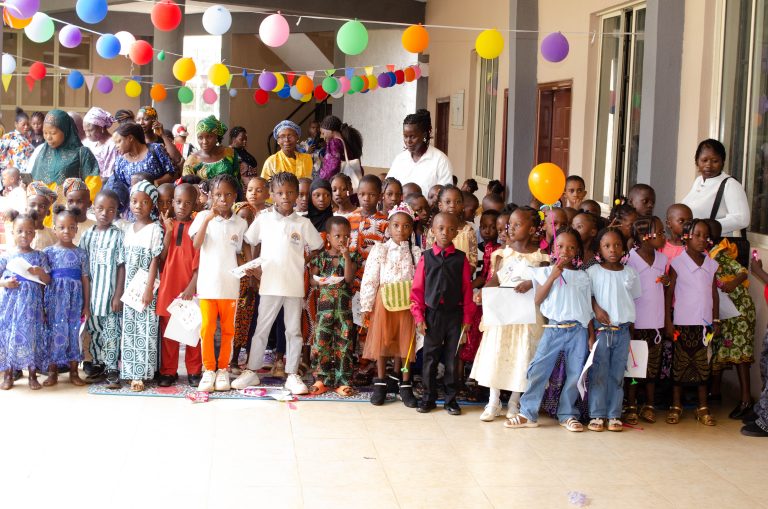


South-west Nigeria has one of the highest rates of twins in the world. For the Yoruba people, twins, known as Ibeji, are revered and believed to bring blessings and good fortune to their parents. They are even celebrated with a traditional praise song, the oriki Ibeji.
At the IBeGe Project, we think twins are special for another reason too: they give researchers information we cannot get from anyone else.
Two kinds of twins
There are two types of twins. Identical twins share exactly the same genes. Non-identical twins share about half of their genes, like any other brothers and sisters. In both cases, twins are conceived at the same time, carried in the same womb and raised in the same family, so they share many experiences.
By comparing identical and non-identical twin pairs, we can estimate how much of a trait comes from genetic factors and how much from environmental factors.
Genes and environment in simple terms
Genetic factors are what children inherit. They make us similar to our parents, siblings and other relatives. Environmental factors are the experiences we have, and they can make us similar to our family members or different from them.
What we do with this knowledge
Once we know how much of a trait is shaped by environment, we can carry out further research to find which parts of the environment matter. That lets us advise parents and caregivers on practical ways to support their children.
This matters beyond twins. In the long term, what we learn can benefit Nigerian children and their families, whether or not the children are twins.
Join us
Are you a twin, or a parent of twins? We invite families to take part in our research and help us understand how children in Nigeria can thrive. Call us on 07071329046, or visit our Take Part page.